What is Man Utd's 'DNA' and does it really matter?
As Manchester United look for Ruben Amorim's successor, Phil McNulty asks if a club's so-called "DNA" is actually relevant?
What is Man Utd's 'DNA' and does it really matter?
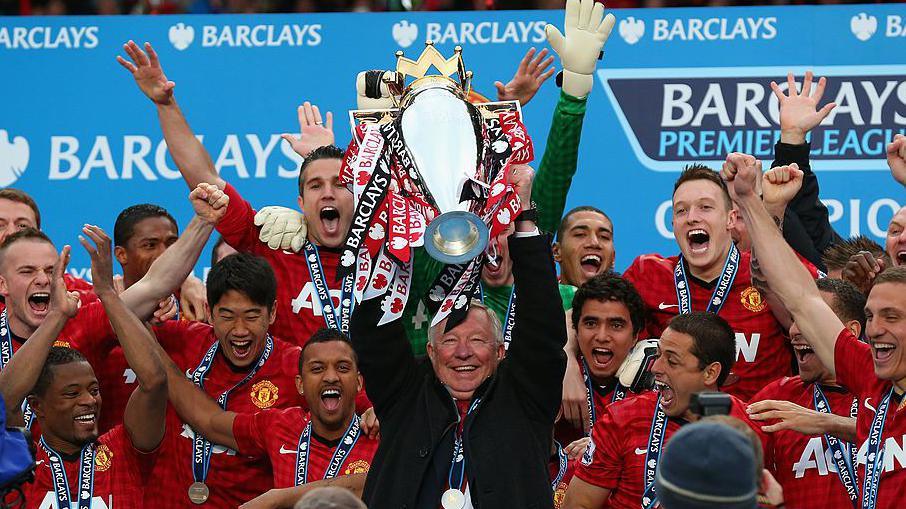 Image source, Getty Images
Image caption,
Manchester United are attempting to recreate past glories as they search for Ruben Amorim's successor
By
Chief football writer
Manchester United's latest search for a new manager after Ruben Amorim's sacking has revived the time-honoured call for his successor to fit the club's "DNA".
This mysterious commodity is the comfort blanket in times of turmoil - usually harking back to glory days and happier times.
After Amorim's departure, former United defender Gary Neville believes the Red Devils are at the point they need a manager "who fits the DNA of the football club".
It is not solely a United issue, though, with former Liverpool striker John Aldridge reacting to the 0-0 draw against Leeds United by posting on X: "It seems we've lost our DNA. No real drive, desire and lack of ideas."
When trouble strikes, the "DNA" call demands a return to what a club knows best, what it stands for, what brought its biggest successes.
That may explain why United minority owner Sir Jim Ratcliffe and his cohorts are looking at figures with rich Old Trafford history as they seek an interim manager.
Darren Fletcher took charge at Burnley on Wednesday, while Ole Gunnar Solskjaer - sacked from the post in 2021 - and Michael Carrick are also in the frame.
Fletcher and Carrick won 10 Premier League titles between them. Solskjaer won six, and also scored one of the most famous goals in United's history to win the 1999 Champions League final against Bayern Munich in Barcelona.
Fletcher even felt the need to seek Sir Alex Ferguson's "blessing" to take temporary charge, such is the 84-year-old's lingering influence.
Ferguson, as a reminder, won 13 Premier League titles, two Champions Leagues, and two domestic league and FA Cup Doubles.
But does his "blessing" still need to be sought 13 years after his retirement? Will doing so really revive United's pursuit of that lost "DNA"?
Former United goalkeeper Peter Schmeichel told BBC Radio 5 Live: "The thing about Manchester United is that it's not just any club. They have been through [Jose] Mourinho, [Louis] Van Gaal... big-name managers and it's not worked.
"They come in, they know it is a short period of time, and they bring in their own systems, which don't work unless you play the Manchester United way.
"The club should think very, very long and hard about who fits the bill. We've heard names like [Thomas] Tuchel, [Julian] Nagelsmann, Xavi, [Zinedine] Zidane - all big names, but do they understand Manchester United?"
So does a club "DNA" actually exist, or is the notion irrelevant? Does it matter that a manager must "get" a club through past association?
Disciples believe it is in a club's genes - the style and emotion conjured up by simply mentioning its name.
Explaining United's "DNA", Neville told Sky Sports: "Barcelona will never change for anybody. I don't believe United should change for anybody.
"The club has to find a manager who has got experience and who's willing to play fast, entertaining, attacking and aggressive football."
That was United's trademark under Ferguson and as far back as Sir Matt Busby - coupled with the desire to blood young talent.
Think the 'Busby Babes'. Think the 'Class of 92', which included Neville, brother Phil, David Beckham, Nicky Butt, Ryan Giggs and Paul Scholes.
So many of those who were instrumental to those later triumphs are now significant media figures, increasing scrutiny.
Indeed Amorim - in his final days at United - said: "If people cannot handle the Gary Nevilles and the criticism of everything, we need to change the club."
When Aldridge mentioned Liverpool losing their "DNA", he was referring to passion, desire and emotion embedded in the club's triumphs - exemplified most recently by the electrifying attacking football they played under Jurgen Klopp.
But times change. The most valuable playing currency in football now is winning - no matter how that is achieved.
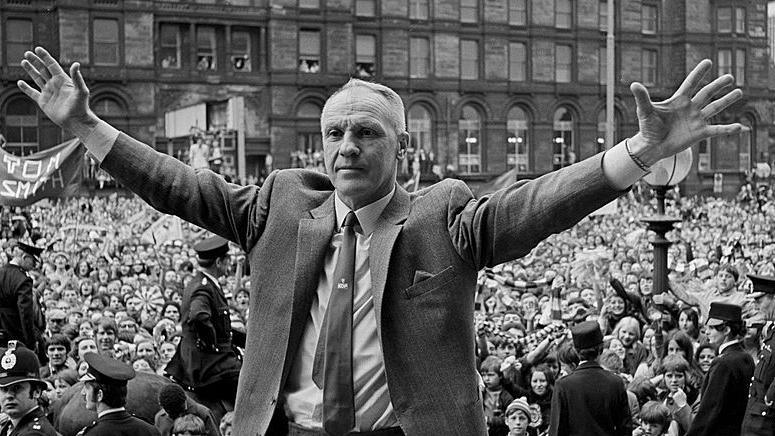 Image source, Getty Images
Image caption,
Legendary Scot Bill Shankly is credited with what Liverpool fans regard as their "DNA"
Which clubs have a 'DNA'?
This is usually decided by supporters who taste success and believe there is no other way this can be achieved.
Manchester United feel they know theirs, as do Liverpool - including a deep connection between fans and manager, understanding the raw emotions that fuel Anfield's fires.
Barcelona's possession-based "DNA" is largely the product of Johan Cruyff's time as player and coach, later recreated by those who worshipped - and played under - him, such as Manchester City boss Pep Guardiola.
Ajax rarely shift from strategies that brought three successive European Cups from 1971-73 - a 'Total Football' style devised by legendary coach Rinus Michels, then put into practice, led by Cruyff. It was also based around a production line of young Dutch players.
Real Madrid's "DNA" is winning. The same for Bayern Munich.
Two of the most successful clubs in recent years - claiming titles domestically and winning the Champions League for the first time - are Manchester City and Paris St-Germain. Neither have a discernible "DNA". Not that it matters.
In the Premier League, we see two prime examples of clubs believing they have a "DNA", but the claims ring hollow.
There is 'The West Ham Way' - stretching back to Ron Greenwood's management in the 1960s, and fans boasting they won the 1966 World Cup for England by having captain Bobby Moore, hat-trick hero Geoff Hurst and goalscorer Martin Peters in their team.
Sam Allardyce was criticised for his approach when he managed the club, but later wrote in his autobiography: "The fans were being brainwashed into thinking that, historically, the club had a particular style of play which was akin to Barcelona, which was potty.
"I once called the supporters deluded and I stand by that. I don't know who invented 'The West Ham Way' phrase, but it's a millstone around the club's neck."
David Moyes ended the Hammers' 43-year wait for a major trophy by winning the Europa Conference League in 2023, but many found his approach not to their liking.
"I've been the manager," he said later. "I couldn't tell you what 'The West Ham Way' is."
At Tottenham, the club motto 'To Dare Is To Do' is regarded as statement of style.
When Ange Postecoglou became manager in June 2023, then chairman Daniel Levy said: "Ange brings a positive mentality and a fast, attacking style of play.
"He has a strong track record of developing players and an understanding of the importance of the link from the academy - everything that is important to our club."
It is true that Postecoglou brought attacking play, but he also brought 22 defeats and a 17th-place Premier League finish last season.
Winning the Europa League - in a shocking final against Manchester United that was an insult to any perceived "DNA" - did not save him from the sack.
So is a club's 'DNA' just a romantic myth?
Any mention of "DNA" is usually laced with romanticism.
Mourinho could not have been further from what Manchester United regard as theirs when leading them to success in the Europa League and League Cup in his first season. He just won.
Those who create this mystical power are few and far between - leaders such as Bill Shankly and Klopp at Liverpool, and Ferguson at Old Trafford.
"DNA" is colourful code for what makes clubs win - realistically requiring top-class players and managers.
Calls for Manchester United to "return to their DNA" are understandable - but where is the character who can recreate it? Would they even want to? Does it even matter if they have any previous connection with the club?
The real world dictates it needs charismatic personalities, usually touched by greatness.
Figures like Sir Alex Ferguson are not easily found.