What to expect from the planets in 2026 — key dates and sky events
Your complete guide to the brightest planetary moments of 2026.
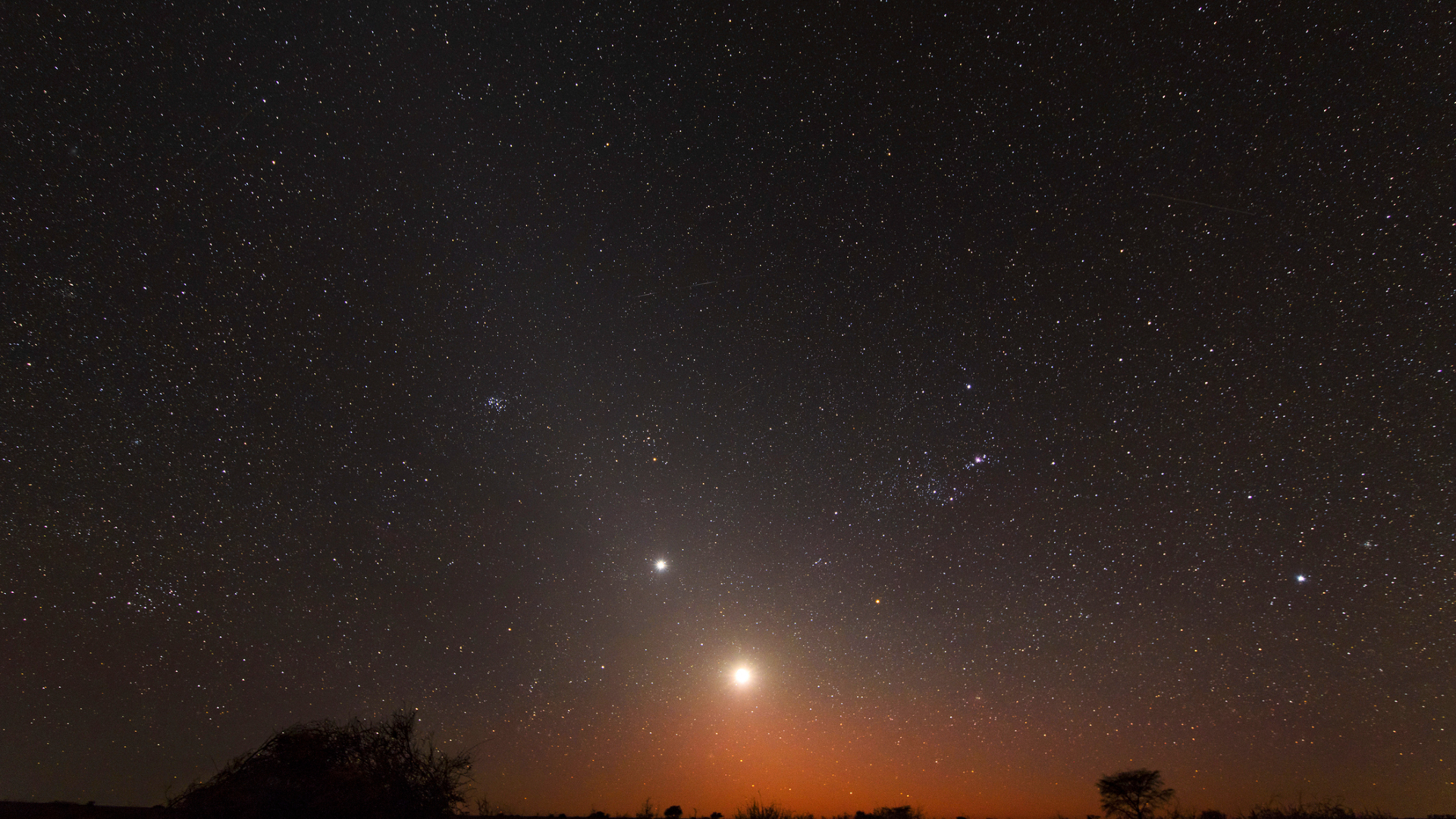
Rising moon and Venus photographed from Namibia. (Image credit: Westend61/Getty Images)
Want to know when each planet will be at its best or when you can catch eye-catching planetary pairings in 2026?
This guide breaks down the major planetary events of the year, from conjunctions to oppositions to close planet-star encounters.
Mercury
Mercury, the smallest of the planets visible to the naked eye, appears as an evening star in the western sky, setting about an hour after the sun. As a morning star, it rises about an hour before the sun in the eastern sky. To view the planet, a clear, unobstructed view of the horizon is essential. Mercury usually appears as a bright "star" with a yellowish or ochre tint.
Visibility windows in 2026
- Evenings: Feb. 5–26; June 1–22; Sept. 28–Oct. 19
- Mornings: March 27– April 17; July 26– Aug. 16; Nov. 13– Dec. 4
When will it be at its best?
- Evening: Feb. 5–26
- Morning: Nov. 13– Dec. 4
On the evening of Feb. 18, about 30 minutes after sunset, Mercury will sit just 1 degree above a slender waxing crescent moon low in the west-southwest.
Breaking space news, the latest updates on rocket launches, skywatching events and more!
Venus
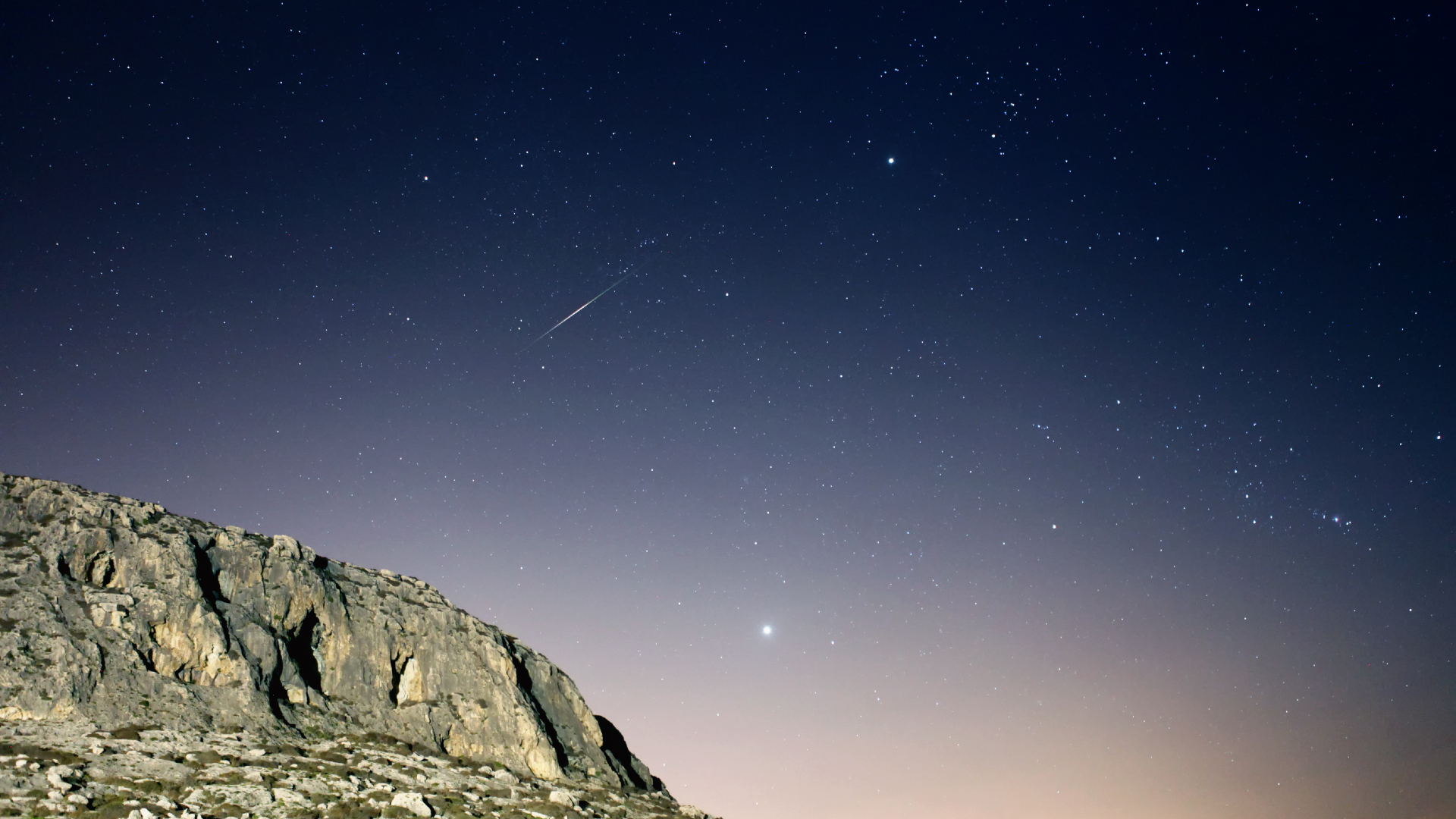
Venus will shine bright in the evening sky from March through October. Here is shines over the Ghar Lapsi cliff face in Malta, while the Orion Nebula is seen on the right. (Image credit: William Attard McCarthy - McCarthy's PhotoWorks/Getty Images)
Venus, with its nearly circular orbit and a diameter only 400 miles (640 kilometers) smaller than Earth's, shines with a brilliant, steady silvery light.
Visibility windows in 2026
- Evenings: March 8– Oct. 14
- Mornings: Nov. 3– Dec. 31
When will it be at its best?
Venus reaches greatest brilliancy in the evening sky on Sept. 19 and in the morning sky on Nov. 29. In late September through mid-October, and again through most of November, Venus will show a striking crescent phase in telescopes and steady binoculars.
Notable conjunctions:
- March 8: Venus passes 1 degree to the upper right of Saturn.
- June 9: Venus passes 1.6 degrees to the upper right of Jupiter — a brilliant sight in the west-northwest 45 minutes after sunset.
- Nov. 7 (morning): Shortly before sunrise, look low to the east-southeast for Venus, a crescent moon, and the star Spica, all fitting within 2.5 degrees.
Mars
Mars, long associated with Ares, the Greek god of war, shines like a star with a yellowish-orange hue and can vary considerably in brightness.
Visibility in 2026
- Mornings: March 18- Dec. 31
When will it be at its best?
This is an "off" year for Mars. The planet begins 2026 lost in the sun's glare and reaches solar conjunction on Jan. 9, sitting on the far side of the solar system about 223 million miles from Earth.
Mars begins to reappear in the third week of March, rising before sunrise among the faint stars of Aquarius. It moves into Taurus for the first half of summer, shining only around magnitude +1.3.
Sky highlights:
- Sept. 25: Castor and Pollux point directly toward Mars.
- Oct. 11: Mars passes through the Beehive Cluster in Cancer — an attractive sight in binoculars.
- Nov. 26: Mars passes 1.7 degrees above Regulus in Leo, creating a dramatic color contrast.
- By late December, Mars brightens to magnitude –0.1 and will rival Arcturus in both color and brightness.
- Feb. 19, 2027: Mars reaches its next opposition, so it steadily approaches Earth late in 2026.
Notable conjunctions:
- April 20: Mars aligns closely with Saturn and Mercury.
- July 4: Mars passes just 0.1 degree south of Uranus, offering a superb guidepost for locating Uranus.
- Nov. 16: Mars passes 1.2 degrees to the upper left of Jupiter.
Jupiter
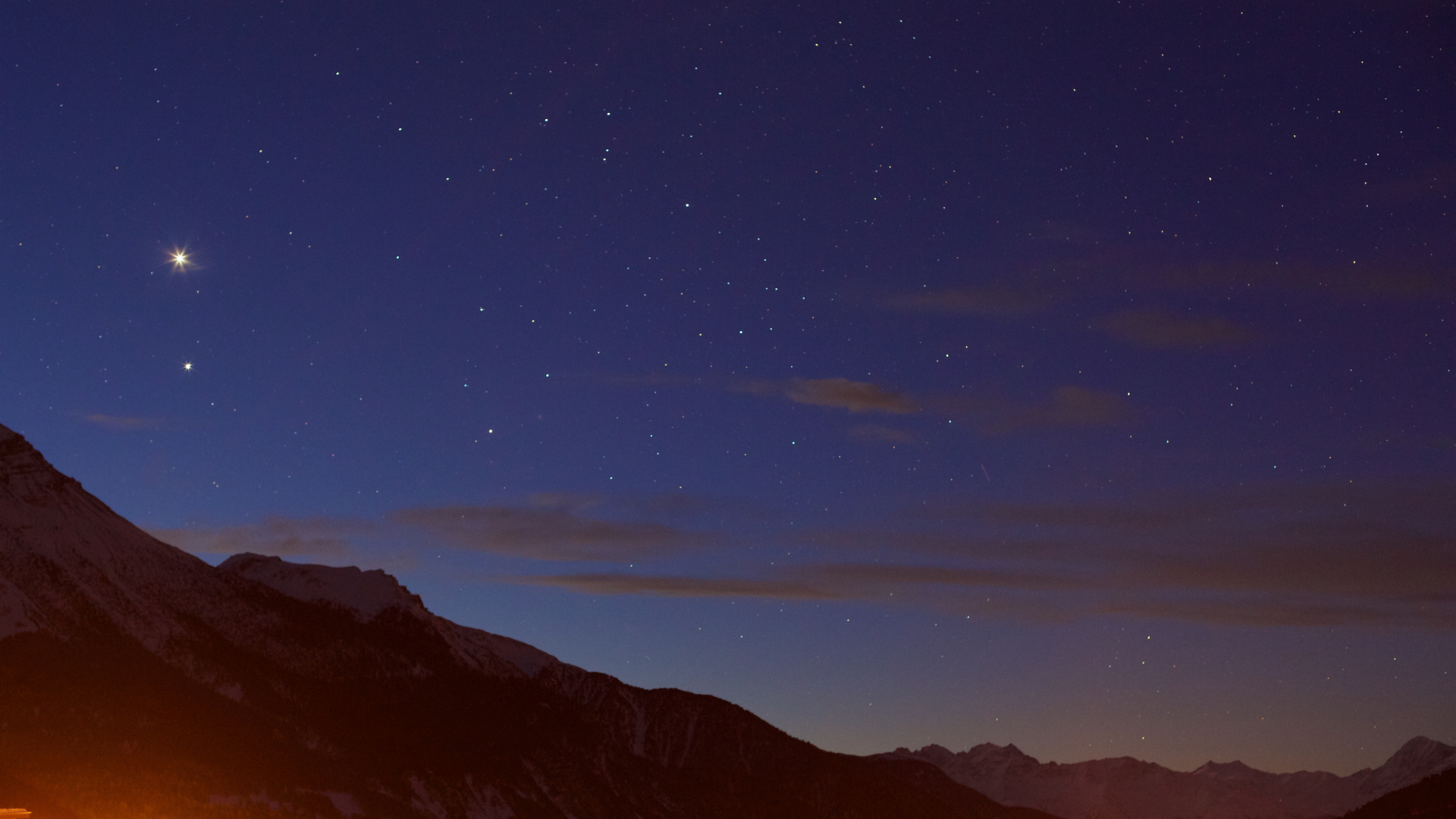
Jupiter and Venus will shine close together on June 9, 2025. (Image credit: Kerrin / 500px/Getty Images)
Jupiter, the giant planet with a diameter about 11 times bigger than Earth's, shines with a bright silver-white luster.
Visibility windows in 2026
- Mornings: Jan. 1–9; Aug. 19– Dec. 31
- Evenings: Jan. 10–July 7
Jupiter reaches opposition on Jan. 10 and shines brightest from Jan. 1–22 at magnitude –2.7 in Gemini. It enters Cancer on June 22 and Leo on Sept. 24, where it remains through year's end.
On June 9, Jupiter pairs with Venus in a stunning "double planet" display low in the west-northwest at dusk.
Oct. 6 lunar occultation
On the morning of Oct. 6, observers across most of North America (excluding the far West) and northern Cuba will witness a spectacular lunar occultation of Jupiter. A waning crescent moon will slide directly in front of Jupiter, hiding it for up to an hour depending on location. Jupiter disappears behind the bright limb and reemerges dramatically from the moon's dark side.
Saturn
Saturn shines as a yellowish-white "star" of moderate brightness. Its famous rings, invisible to the naked eye, turned edge-on in 2025 and were nearly impossible to see for weeks. They are now slowly opening up again.
Constellation path in 2026:
- Starts in Aquarius (to Jan. 14)
- Enters Pisces (Jan. 14– April 8)
- Moves through Cetus (April 9– June 2)
- Back into Pisces (June 3–Sept 4)
- Back into Cetus (from Sept. 5 onward)
Visibility windows in 2026
- Evenings: Jan. 1–March 8; Oct. 4–Dec. 31
- Mornings: April 12– Oct. 3
Saturn reaches opposition on Oct. 4 and is brightest Sept. 24–Oct. 9.
Notable conjunctions:
- Feb. 15: Saturn sits less than 1 degree from Neptune, though Neptune is much fainter.
- Apr. 20: Saturn aligns with Mars and Mercury.
Uranus
Uranus can be glimpsed with the naked eye under very dark skies by keen-eyed observers. At magnitude +5.6, it is easily found with binoculars; small telescopes show a tiny greenish disk.
Uranus spends all of 2026 in Taurus.
Visibility windows in 2026
- Evenings: Jan. 1–May 5; Nov. 25– Dec. 31
- Mornings: June 9–Nov. 24
Uranus reaches opposition on Nov. 25 and is brightest Oct. 24–Dec. 30.
On July 4, Uranus sits only 0.1 degree north of Mars, making Mars an ideal pointer to the seventh planet. Mars will outshine Uranus by a factor of about 158.
Neptune
Neptune remains in Pisces throughout 2026. At magnitude +7.8, it is visible only in binoculars or a telescope and appears bluish-gray.
Visibility windows in 2026
- Evenings: Jan. 1–March 6; Sept. 25–Dec. 31
- Mornings: April. 8– Sept. 24
Neptune reaches opposition on Sept. 25 and is brightest July 28–Nov. 24.
On Feb. 15, Neptune lies less than 1 degree to the upper right of Saturn, though Neptune is only about 1/525 as bright.
Joe Rao serves as an instructor and guest lecturer at New York's Hayden Planetarium. He writes about astronomy for Natural History magazine, Sky and Telescope and other publications.
Joe Rao is Space.com's skywatching columnist, as well as a veteran meteorologist and eclipse chaser who also serves as an instructor and guest lecturer at New York's Hayden Planetarium. He writes about astronomy for Natural History magazine, Sky & Telescope and other publications. Joe is an 8-time Emmy-nominated meteorologist who served the Putnam Valley region of New York for over 21 years. You can find him on Twitter and YouTube tracking lunar and solar eclipses, meteor showers and more. To find out Joe's latest project, visit him on Twitter.
You must confirm your public display name before commenting
Please logout and then login again, you will then be prompted to enter your display name.