What’s up, what’s down: The price changes and new laws coming to NSW in 2026
An extension of the $60 toll cap is the main source of relief at the state level, but there are also new rules over gas, as well as behavioural standards for councillors.
It’s the same old story: new year, new fees. As the clock strikes midnight on Wednesday, indexation and rule changes mean costs go up.
But it’s not all bad news: there are savings to be found. At the federal level, increases in social security payments and the expansion of childcare subsidies are among them. (That list can be found here.) At the state level, an extension of the $60 toll cap is the main source of relief, but there are also new rules for developers, councillors and state government agencies.
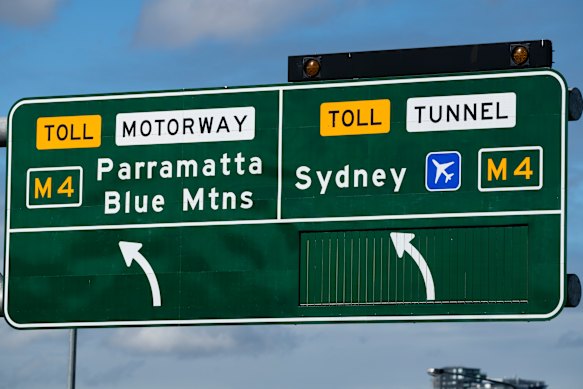
New year, new toll road prices.Credit: Rhett Wyman
Toll adjustments
The maximum toll for passenger vehicles on NorthConnex will rise to $10.39, while the cost to use the Westlink M7 will be $10.30. The Hills M2 will jump to a maximum of $10.40 per trip, and the Eastern Distributor will hit $10.26 for all journeys.
The Cross City Tunnel will increase to $7.27, while the M5 South-West will increase to $5.95 per trip. The flat price for use of the Lane Cove Tunnel and the Military Road E-Ramp will increase to $4.22 and $2.11, respectively.
Loading
Ordinary WestConnex users could be paying up to $10.79 to use the M4 section, with increases to the M8 and M5 East bringing the toll to a maximum price of $9.15 per trip. The M4-M8 Link, including the Rozelle interchange, has seen an increase in maximum price to $6.48 per trip.
All heavy vehicle users will also see increases across the board in line with indexation.
It’s not all bad news: the $60 toll cap has been extended indefinitely beyond January 1.
Gas in new residential developments
City of Sydney Council is banning indoor gas appliances in new residential developments from Thursday. The new restrictions will only affect new residential constructions, with existing buildings and industrial uses exempt.
Restrictions on new gas appliances come into effect on Thursday, and will expand in 2027. Credit: Adobe Stock