Wolf Supermoon 2026 to light up the skies this weekend: Best time to watch
Prepare for a spectacular celestial event as the Wolf Supermoon illuminates the UK on January 3rd, 2026. This exceptionally bright and large full moon will be visible just after sunset, offering breathtaking views. 2026 is an unusual year with 13 full moons, including a blue moon in May, making this January's Wolf Moon a must-see.
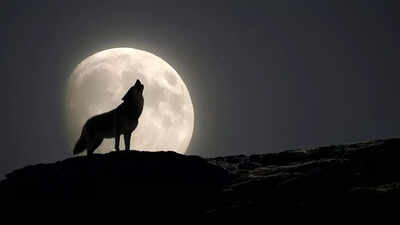
The initial complete Moon of 2026 is anticipated to make a dramatic entrance by illuminating the United Kingdom’s winter skies on 3rd January with an extraordinarily brilliant and full glare.
Named Wolf Supermoon, this year’s full Moon in January will also be a supermoon, appearing extra large and bright as it comes to a closer position to the Earth in its orbit. To make matters more interesting, it is scheduled to make a dramatic entrance at a point in time when the festive lighting has been removed, and the post-Christmas slump has already set in. If the weather permits, this heavenly event will feature the Moon prominently on the earliest evening horizon, creating breathtaking scenes in the surrounding environment.
This spectacular event of nature will also mark a year of extraordinary astronomical occurrences, as 2026 will experience 13 complete Moons, compared to the normal 12.
What is the best time to view the Wolf supermoon 2026
According to BBC reports, the Wolf Supermoon will rise on the evening of Saturday, 3 January, with the exact full moon at 10:03 GMT. But the best time for viewing the Supermoon is actually during moonrise, when the Moon will appear low on the horizon, making it look bigger than normal.
The times of Moonrise differ from place to place. In the UK, it is expected that the Moon will rise in the late afternoon, just before sunset.
Viewing the eclipse from an open location, like a hill or coast, may help. City residents, on the other hand, are also in a great position as the moon will be positioned behind buildings in the background.The Wolf Moon will reach its peak brightness on the 3rd of January, 2026. For those in the Indian time zone, the full moon phase will begin at approximately 3:33 pm IST.
However, it must be noted that at this time, the moon will actually be positioning itself below the horizon, thereby not being visible yet. The most spectacular views of the Moon will appear towards the end of the evening, with the moonrise taking place. On the 3rd of January, the supermoon is likely to rise towards the east sky just after sunset, which occurs between 5:45 pm and 6:00 pm, depending on the respective places.
It will then appear in the sky as it progresses, eventually setting in the western sky on the 4th of January.
Why 2026 is an unusual year for full moons
An average year comprises 12 full moons, one for each month. But for 2026, it will experience 13 full moons as reported by BBC.May shall witness the phenomenon of two full Moons in the same month, which is known as a blue Moon. The actual reason why the Moon turns blue is not known, but the term blue Moon is used to signify an unusual phenomenon, thus the usage of ‘once in a blue Moon’.Apart from the supermoon in January known as the Wolf Supermoon, there are more supermoons this year: