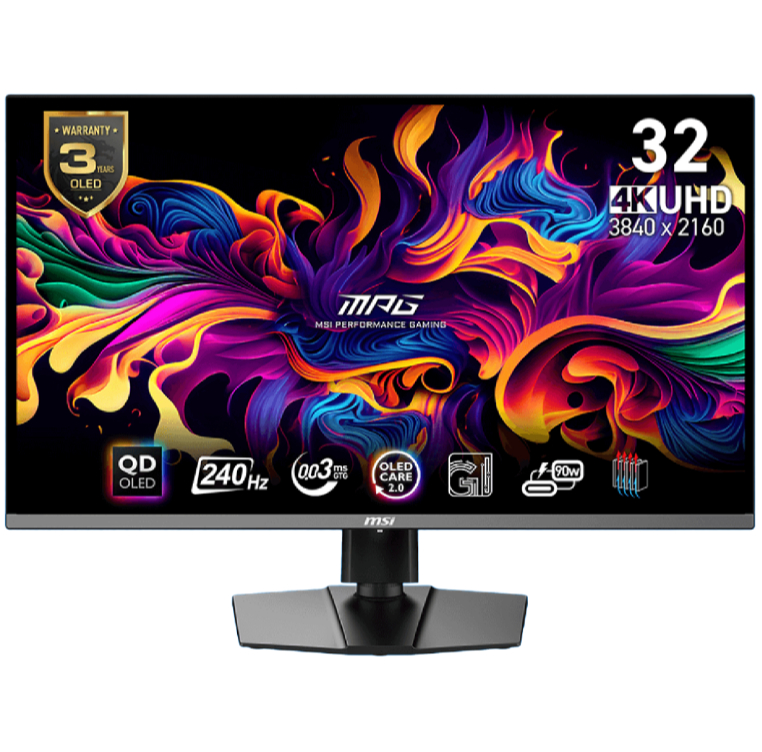
Asus launches new gaming monitors with two completely different 'RGB stripe' OLED panel technologies
Okay, this is officially confusing.
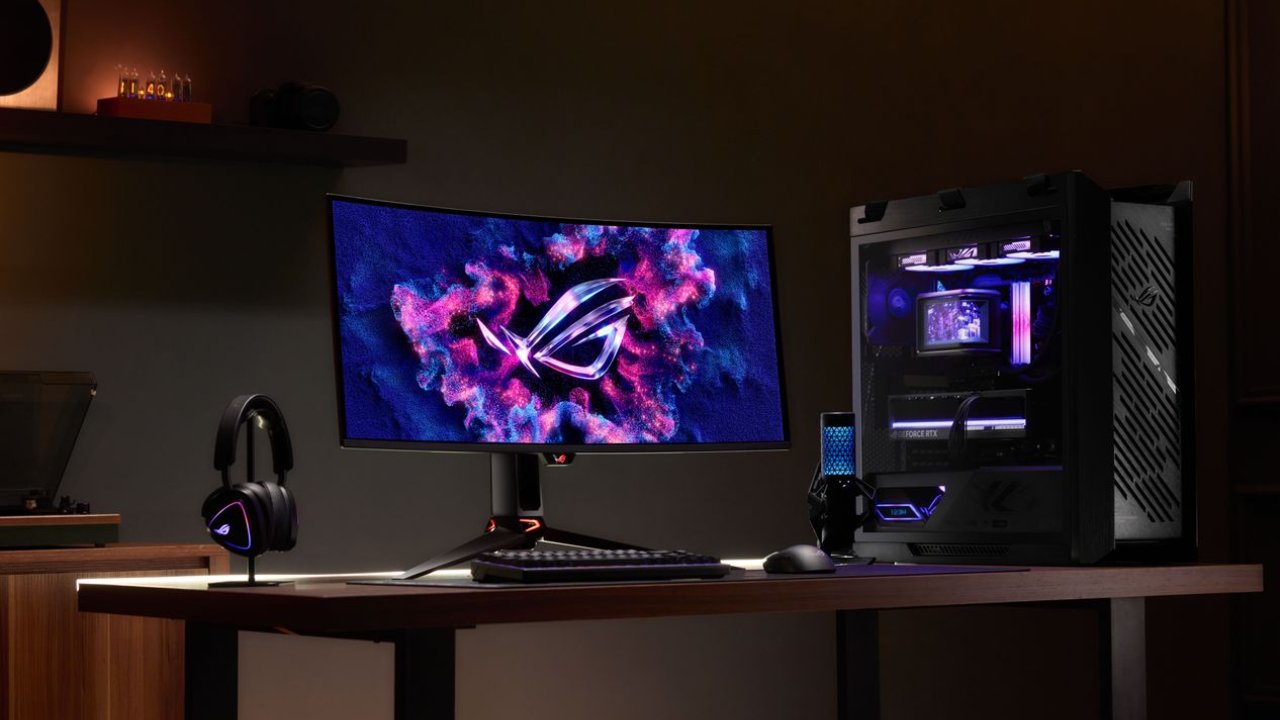
(Image credit: Asus)
Asus has wheeled out some sweet new OLED panels at the CES. The most interesting is a pair of gaming monitors with so-called "RGB stripe" subpixel technology. Where things get confusing is that these two monitors in fact use completely different OLED panels.
To cut a long story short, Asus has a new 34-inch ultrawide that sports Samsung's latest QD-OLED panel technology. Meanwhile, Asus is also announcing a 27-inch 4K model, this time with LG's newest panel tech. And what both panels share is RGB stripe subpixels.
Previously, Samsung's QD-OLED panels have used RGB—or red, green and blue—subpixels, but arranged in an unusual triangular pattern instead of the vertical "stripes" seen in pretty much all LCD monitors.
Image
1
of
2
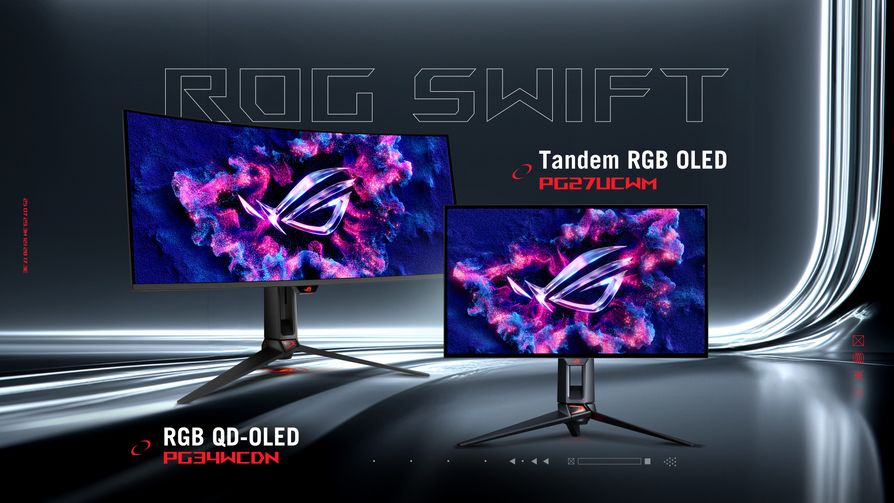
(Image credit: Asus)
The basic specs of this Asus are pretty much the same. So, along with the RGB stuff, there's improved full-screen brightness of 300 nits, 1,300 nits peak HDR brightness and 360 Hz refresh. Like the MSI monitor, the Asus ROG Swift PG34WCDN also has a new panel filter that helps to minimise the contrast problems that QD-OLED tech has thus far had with strong ambient light.
Next up is the ROG Swift PG27UCWM. This is the 27-inch 4K model with the LG panel tech. Confusingly, it appears that LG, who makes the panel, still refers to this new panel as "Tandem WOLED". Apparently, the "W" refers to the underlying white OLED source lights, which are passed though colour filters for each subpixel, and so no longer references the use of a white subpixel.
Keep up to date with the most important stories and the best deals, as picked by the PC Gamer team.
For now, Asus isn't quoting full specifications. It will be a 240 Hz 4K panel, with a 480 Hz 1080p alt mode. However, Asus has yet to reveal brightness specifications. One source claims that LG rates the panel at only 250 nits full screen, which is perhaps understandable given that LG has dropped with white subpixel that it previously used to boost brightness.
It may also be the case that when (as we assume) LG transfers this new tech to a panel with lower pixel density, like the 34-inch ultrawide form factor, the panel may be capable of greater brightness.